Showing posts with label International Justice. Show all posts

Tuesday, 6 November 2012

A Closing

The month is over, and I have been sitting staring at the computer, from my sister's apartment in Frankfurt, for over an hour. I know that this is going to be my last blog post for this blog. It's time for closure, on a lot of different levels.

(NOTE: I will be starting a separate blog, called 'The Law, Justice, and Peace Diary', please visit it and read along! lawjusticepeace.wordpress.com)

But how do you wrap up an adventure?

Perhaps in two ways - by reflecting on what happened, and by looking towards the future.

Looking to the future is the easiest - I will be heading to Calgary, Alberta, Canada. I don't know exactly what I'm going to do there, yet. But I do know that I am going to continue to work towards making the world a better place, slowly and steadily. And I do know that I'll be getting married. Those are both very positive things.

But there has been a lot of developments, experiences, and friendships over the past year in Kenya. It is clear that the benefits that I've gained from this opportunity far outweigh the contributions that I made to Human Rights in Kenya, or to the ICJ Kenya office. But I do hope I was able to leave some positive developments.

Kenya itself is a place I will not soon forget. Full of extraordinary contrasts and enigmatic personalities, there is a conflicting sense of great hope and opportunity, perhaps underscored by the fear of violence. Ranked 16th on the 'Failed States Index', there is something inherently false or blatantly ignorant about considering Kenya a poor, unstable, developing nation. The level of sophistication in Kenya is palpable. The level of political posturing immeasurably immense. And the discrepancy between rich and poor is strikingly obvious.

That is a long-winded way of saying that the situation in Kenya is complicated. There are people suffering, and there are people flourishing. I hope I gave a good picture of both those sides over the course of this blog.

ICJ Kenya, my employers, continue to be a leading civil society organization in the country and the region. Civil society plays a key role in monitoring and agitating for positive changes in Kenyan society, so it is concerning when news reports come out that try and 'rubbish' civil society through conspiracy theories. There is a lot of work left to do.

Personally, I leave with more knowledge and passion than when I arrived. I'm a committed Human Rights advocate, now. That much is certain.

Where that takes me, well, we'll have to wait and see.

--


A recap of the 3 most popular of my blog posts:

1. Lunch!!!

2. But for the Donkey...

3. I Grew up Herding Cattle...

--

As a tribute to my time in Kenya, my favorite Kenyan songs (enjoy!):

Camp Mulla - Fresh All Day

DNA - Maswali na Polisi

P-Unit ft. Sauti Sol - Gentleman

Ringtone ft. - Talanta

Just a Band - Huff & Puff

Muthoni the Drummer Queen - Mikono Kwenye Hewa


--

A brief Interlude from Istanbul (an archived message I left myself a while ago):


"It's warm here - 28 degrees or so. The airport is pristine, and teeming with people going, well, everywhere. This is a cultural melange, and none of the languages seem the same, yet they all sound similar. Everyone is tanned, except for the occasional person that is so shockingly pale that I wonder about their health. I think I'm a bit culture shocked. Everything also smells like perfume or cologne. It makes me a bit dizzy, although that could also be the aftereffects of a red eye flight.

I am in Istanbul, but I am far away."

Monday, 1 October 2012

Mostly Pointless Sidenote

I recognize that there are a lot of major issues going on around me right now (this, this, and this), but I feel like I've been slightly 'low-energy' over the past few days. Not that I haven't engaged with the issues - they've been a focal point of work, meetings, and discussions - I just haven't had the inspiration to write a particularly insightful or clever post about them.

Instead, I took to reading other blogs. On international justice. And then I read this one, and it made me self conscious about blogging. So, I've moderately changed the title of the blog (see if you notice). Hopefully it maintains some semblance of credibility.

--

In other news, I have noticed that Invisible Children continues to try and resurrect itself, through 'post-breakdown' interviews on Oprah (I had no idea she had a new show). I have also noticed their 'Defection Campaign' (see here and here), which is actually founded on good principles and is a great initiative, especially reaching out through radio media. It would just be nice if they recognized somewhere, anywhere, that the defection process has been severely hampered by the lapse of the Amnesty Law in Uganda back in May 2012. Or that there are ongoing challenges with resettling and reintegrating ex-combatants.

I blogged last month about attending a forum with victims in Gulu, which focused specifically on the Amnesty Law. Amnesty granted the ex-combatant immunity from prosecution, a small amount of money, some food, and some household and agricultural appliances. In fact, one of the documents that IC cites notes that the Amnesty Act is the "single most significant pull factor" (Page 8) for rebels to leave the bush (there have been around 26,000 amnesties granted). In the forum, one thing that was mentioned was that the rate at which rebels had left the bush, from when the Amnesty Law had been enacted (2000), had diminished over time. So it would seem logical that ending the granting of amnesty would certainly throw a major roadblock into any defection campaign. And I'll be repetitive and say that issues of resettlement (getting ex-rebels into homes) and reintegration (community acceptance of the ex-rebels) continue to be major challenges. And that is not even delving into the complicated matter of the actual victims of the conflict.

I would think that those issues would be fairly important to address or at least acknowledge, before engaging in mass littering in the forests of Uganda/DRC/CAR.


Saturday, 1 September 2012

Week 4: IPSI Hague Symposium (Simulated Transition)

Week 4: the penultimate week of the Hague Symposium.

Not ones to let us languish in the wonderful weather, cafes, and ambience in the Netherlands, the IPSI staff had prepared a comprehensive 'Transition Simulation' for all the students to participate in. By comprehensive, I mean three days of immersive role-playing. It was live-action role playing at its finest. Unfortunately, it was based on reality - instead of dressing up as knights, wizards, or elves, we were Presidents, Rebel Leaders, Military Commanders, and NGOs. Before you start fantasizing about a group of characters dressed up like characters from Star Wars, the simulation, while fictional, was based on the situation in Afghanistan.

First, on Monday, we were given a nice lecture on Negotiation strategies, tactics, and theory by Dr. Perlot from the Clingendael Institute. Vastly overconfident, I found out that I have the 'People' negotiation style, which tends towards interpersonal relationships - I am the type that tries to be empathetic, and tries to put the needs of people first. Very sweet. How would that play out in the Transition Simulation?

Before discussing the simulation itself, let's set the stage. Kanrayistan (the fictional Afghanistan) had various domestic and international players in the field. For example, there was the USA, Coalition forces, India, Pakistan, Iran, Chinese business interests, and the UN as international players. More domestically, there was the President, Warlords, the Taliban, The National Army, Oxfam, Pakistani intelligence, the ICC, and Dutch and Australian commanders of the coalition forces. Each one of those positions had player roles, as well as a few other roles (the Media).

I got the role of US Ambassador.

I hope you can imagine the impact of getting that news - I'm a pacifist, anti-imperialist, and a 'people' person. I was now in charge of implementing the ideologies and policies of the most powerful nation on Earth. Ideologies and policies that I don't particularly agree with. That's putting it mildly, but 'hate' is only a word I'll use about things I understand better.

So, now, I'm in a position, with 60 friends, where everyone is now viewing me as a huge bully, as being slightly morally corrupt, and looking to get 'special deals', in order to further the transition of US troops out of the country. A very difficult position to be in, after 3 weeks of getting to know, respect, and become good friends with everyone.

So, now, we have 3 days (which represents about 18 months) to 'transition' Kanrayistan. Here's the recap:

Day 1: We are all friendly, and are working (somewhat slowly) towards trying to find some 'transitional solutions' for the US to pull out its troops while maintaining peace, security, and some form of democracy in the area. First major challenge - despite the fact that the US refuses to 'negotiate' with terrorists, the Taliban really deserve a place at the negotiation table. Putting them there leads to massive unrest, and many different people threaten to leave the negotiation table. When we finally get that sorted, we get a press release saying that the Dutch have left the country, effective immediately, after public pressure back home, and because of a recent suicide bomb attack. That pretty much scuttles all the plans that we had made up until that point.

All in the meantime, everyone is taking time to have side-meetings and caucuses - plotting and scheming - and me and my team are forced to mediate small disputes, while at the same time try and come up with broad strategies for peaceful transition. More soldiers die in suicide attacks.

We continue to work, after dinner. I'm given a note at 2 am about the non-cooperation of the Taliban. I'm also told to prepare for a press briefing, which occurs at 4am. I'm still wearing the same suit, and struggle through the press briefing. But it goes well. (I think?).

Day 2: After an hour of sleep, we move into the next day. Sleep-deprived and feeling overwhelmed, the day passes in a blur. More side-dealings, more major news releases that threaten to overturn everything. There is a decision to exclude the Pakistani secret services from the negotiation table. It passes - the characters playing the Pakistani ISI storm our strategy meeting, I get (softly) assaulted, and the pakistani ambassador leaves in tears. We're all functioning on empty tanks by this point. With an hour left in the day, I take stock of what we've accomplished. Virtually nothing - everything has been about fighting fires and dealing with controversy. The negotiation day ends, and one person, out of character, apologizes if she's been rude. Being the suave character I am, I jokingly say 'yes, you are SO rude'. Tears flow, and I learn a good life lesson - I'm not funny on 1 hour of sleep. At the end of the day, the 'warlords' come in, offer us some M&Ms, and just want to chat. The thought of chocolate made me feel sick, so I left...just as someone snapped a picture.

Final Day: The 'Simulation Control' team made sure to shut things down early, so I managed to get a full 8 hours of sleep. I feel more tired than ever, though. Especially when one of the first things I have to deal with is a 'newspaper article' entitled - "US Ambassador at secret Warlord party with narcotics". Tensions are high, cohesion within my team is crumbling, and my grip on reality is starting to crack a little bit. More 'reports' of people killed in suicide bombings. More communications about side-dealings and double-crossing that undermines everything that we're trying to accomplish. I'm unsure if people are acting in character, or if they are no longer my friends. I'm exhausted.

I give my final press briefing at 12:30. Everyone is there. I am to highlight the 'gains made' in the transitional process. I say a bunch of words, but feel like the whole thing was a total failure. The organizers say "and that brings the simulation to a close!" Everyone applauds. I am a bit in disbelief. After debriefing, the truth comes out - this simulation, this game, was never supposed to be successful. In fact, any time things progressed well, specific measures were taken by the organizers to undermine the progress. It's an interesting thing to think about - I conscientiously strived to create a stable peaceful society, in a mythical nation, in an illusory situation, that was never going to possibly work.

There is a deep, philosophical life lesson there. I'm not sure I've figured it out yet.

On a brighter note - we all hugged and made up afterwards. The next day, we graduated, and it sunk in that this was the ending part of the month-long training.

The IPSI group, freshly graduated
(Courtesy of Khaled)
It is incredible how in a four-week span, a group of 60 people can change from a group of utter strangers to very close friends. Over and above all the things I learned at the conference, it's always a great feeling to connect with a great group of individuals from all over the world.

Afterwards, I spent the weekend in Amsterdam with some of my old friends. They took me on a boat ride in the canal, a bike ride of the streets, visited relatives, we lounged in the sun at their garden cottage, and took their kids for a swim at the pool. After such an intense month, it was just the sort of pleasant, mundane, and utterly relaxing visit I need.

Emily and I met this Dutch couple 5 years ago, in a random island on a lake in Uganda. You meet some of the most wonderful people in the most random places. It's a good reminder that doing awesome things generally increases your chances of meeting awesome people.


A Pleasant bike ride through Amsterdam

Saturday, 25 August 2012

Week 3: IPSI Hague Symposium (Site seeing!)

IPSI classes in Action

Going into week 3, and thoroughly emotionally tested by some of the stories and accounts from the country case studies of the past week, we had the opportunity to visit several of the international justice 'mechanisms' in the Hague. As the IPSI president told us, they were all 'rolling out the red carpets' for us. The places we visited included:
  • The Special Court for Sierra Leone (the Charles Taylor portion was held in the Hague, the rest of the trials were conducted in Sierra Leone)
  • The Special Tribunal for Lebanon
  • The International Criminal Court

Some of IPSI's finest at the ICC
A Brazilian, a Lebanese-Australian, and a South African
(Photo Courtesy of Manelle Chawk)

These visits were in addition to the International Criminal Tribunal for Yugoslavia (which I mentioned here) and the Peace Palace, which houses the International Court of Justice and the International Court of Arbitration.

The Peace Palace in den Haag
Home of the International Court of Justice and
the International Court of Arbitration

Visiting the actual buildings, for me, created a tangible sense of 'justice in action'. Seeing all the technology, the formality, and the principles of law brought to life definitely stirs my legal nerdy soul. 

It's interesting to realize, however, that with each of the courts, there are serious challenges and criticisms. For example, the Special Tribunal for Lebanon was set up internationally, through a UN security council resolution, without the express consent of the Lebanese government. It is also an incredibly narrow tribunal - focused on one instance: the assassination of Rafiq Hariri in 2005. It has not been able to arrest any of its suspects, and is proceeding with trial regardless - a trial in absentia. The prosecution's case is built entirely on circumstantial evidence. The political nature of the tribunal means that expectations are unreasonably high, there is already a lot of negative pressure, and it's unclear what impact the STL will have. The existence of the STL seems to raise more questions and concerns than it contributes to the pursuit of justice.

Yet, at the same time, the STL has already released a decision where it has come up with a tangible, precedent-setting definition of the International Crime of Terrorism. From a lawyer's perspective, that is quite a big deal. But from the general public's view, is that Justice? That is an open question, and not one I'm capable of answering, for now. 

I'll say this: the systems of Law and Justice that we seem to be setting up focus on principles (not policies) that 'we' (whoever that is) believe to be essential to a properly functioning society. This 'focus' has two aspects - defining what the principles are, and implementing those principles. That's it. The methods that we use to do this are as varied as the cultures on this planet. Is it the best way of doing things? I have no idea - principles rarely have any grounding in empirical fact. But I'm open to being wrong on that.

The western conception of Justice is a blind woman with a sword and balancing scales. It's interesting because, if you think about it, if she swings the sword, she could injure friends, foes, or no one at all; likewise, how would she ever know if the 'scales of justice' are actually balancing out? This is eerily accurate - for example, the Canadian Criminal Code is littered with crimes that apply to no one, mandatory sentences for certain crimes that hinder rehabilitation or that foster social inequalities, and lacks crimes for certain actions that are detrimental to society as a whole.

Shouldn't Justice be an Architect? Or maybe an Interior Designer? It's an idea worth exploring, since most of the 'Buildings of Justice' that we visited were, well, kind of ugly (with the exception of the Peace Palace). 


The whole IPSI Gang outside of the ICTY
(Photo Courtesy of Khaled)

In addition to the site visits, we also had some interesting in-class sessions as well. The first was on the role of memory in reconciliation. Outside of the issue of Justice, how do we actually help victims? How do we create an environment where it is possible to forgive and/or forget? Or just simply move forward? Often we talk about a lot of different things that come out of conflict, and resolving conflict often involves negotiations, compromise, and taking actions towards accountability, truth-seeking, and acknowledgement. But I wonder, how do you restore or repair human dignity?

This post was full of questions and queries. It highlights one thing - we live in a global world that is far from perfect. A world, however imperfect, that I happen to be a pretty big fan of. It's a world that needs a lot of work, and I'm willing and able to do my part. I just hope we make a bit more room for Justice to be aesthetically pleasing.

--

Interested in learning more about the IPSI Hague Symposium? Check it out here: http://ipsinstitute.org/. The recap of Week 4 is coming up. I guarantee it will involve a lot more colourful language.

Thursday, 23 August 2012

Week 2: IPSI Hague Symposium

Leiden by Night
[Note: I'm now back in Nairobi trying to adjust to a more 'normal' routine. These next few posts are a week-by-week recap of the highlights of the Symposium. For other insight from some of the other participants, please check out the IPSI blog and look at the pictures taken by Keith Lane - the pictures prove that while most of the participants were quite good looking, I am not very photogenic.]

Week 2 of the Symposium focused on specific countries as case studies in Transitional Justice (or lack thereof) - Argentina, South Africa, and the former Yugoslavia.

Juan Mendez, the current UN Special Rapporteur on Torture, gave his personal insights into the historical human rights issues that occurred in Argentina. He was involved as a lawyer who represented 'freedom fighters', and was himself imprisoned and tortured as a result of his work. The situation in Argentina is a real lesson in the struggles for democracy and responsible governance, as well as some of the evils that state officials can perpetuate for the sake of ideology. The history of the conflict in Argentina reads like a movie script, except that some of the violence and evil is unimaginable. A defining feature of this conflict was the use of forced disappearances, which not only included throwing people (alive) off of helicopters and into the sea, but also saw babies taken from their captive mothers to be raised by military families. But the conflict itself went much deeper than this, and after Mr. Mendez' presentation, I can understand why the slogan nunca mas exists. Argentina, now, has changed a lot, but this recent history should not be forgotten.

Charles Villa-Vicencio, who was the National Research Director for the Truth and Reconciliation Commission in South Africa, gave some personal insights into the struggles, challenges, and successes of the transition out of Apartheid in South Africa. The South African conflict was steeped in racism at a level that shocked the consciousness of the entire world. But, it was also a peculiar and unique situation - rarely in global history have the world's nations agreed on such a large scale about the evil that was apartheid, and rarely has such a gifted leader - Nelson Mandela - managed to ascend to power and (a) retain his morality/ethics, and (b) retain his life. The transition (which is still ongoing) of South Africa out of the oppressive apartheid regime involved a collective effort of a huge number of people, many compromises, and a lot of work. Chief among this was the creation and implementation of the Truth and Reconciliation commission in South Africa. None of this came easily, and none of it without sacrifice. One of the main contentions about the South African TRC was its provision of Amnesty for perpetrators. This had two effects: it allowed for perpetrators to tell their side of the story, and allowed for a more full version of the truth. It also meant that they went unpunished. Despite the gains made through the national reconciliation measures, South Africa is now faced with similar racial segregation, this time through issues of poverty and social class, rather than an ideology of racism. That is an altogether different hurdle to get over. But Mr. Villa-Vicencio's presentation left us all feeling a lot of hope and connectedness (ubuntu) with the situation in South Africa.

Finally, we were addressed by two men with lengthy credentials: Ambassador Jacques Paul Klein (Special Representative of the UN Secretary General in both Bosnia and Herzegovnia and Liberia, as well as the Coordinator for UN operations in Liberia) and Bill Stuebner (Former Special Adviser to the Prosecutor of the International Criminal Tribunal for the Former Yugoslavia and Former Chief of Staff and Senior Deputy for Human Rights in the OSCE Mission in Bosnia and Herzegovina). They gave us some background information and insight into the peacekeeping missions during the ethnic cleansing that occurred in the former Yugoslavia, and Ambassador Klein also shared his experiences in Liberia. Both of these men, and the presentations they gave, were altogether different than the previous discussions on Argentina and South Africa. Their perspectives were as 'interventionists' - outsiders who entered into conflicted states, and attempted to end the conflict. Their stories were just as dark as some of the other stories, but their methods and insights were much more...militaristically practical. While the other two presenters discussed the societal impacts, the ideologies, and the long term impacts of transitions, these two gentlemen focused on something much more immediate - peace as the cessation of violence. Their jobs were simple - stop the fighting. And, to that effect, they were successful. However, the current picture of the Balkans is not good, and Mr. Stuebner describes the area as being on top of a 'sleeping dragon' that, when it wakes up, wants blood. He thinks that it is going to wake up soon.

As part of our experience learning about the former Yugoslavia and the Balkan conflict, we also paid a visit to the International Criminal Tribunal for Yugoslavia. We were introduced to the inner workings of the Tribunal, and discussed some of the different aspects of how it was set up, how it functions, and what it is doing now, as it winds up its mandate. It has prosecuted 161 indicted criminals who were responsible for the ethnic cleansing and other atrocities. I suppose the major question is, then, if you've managed to prosecute 'those most responsible', and there is still a likelihood of more violence, what has actually been accomplished? The answer, I think, is first, accountability, and second, that Justice is necessary, but not sufficient, for peace. (Although, some people might even argue that it's not even necessary for peace).

Outside of the symposium, week 2 was full of bike rides, picnics, beaches, and general merrymaking. I also managed to sign up for creating a 'Transitional Framework' for IPSI posterity, but that will wait until week 4.

Thursday, 2 August 2012

Week 1: IPSI Hague Symposium

Street Sculptures in Scheveningen

Greetings again from den Haag, in the Netherlands. I'm now a week into the IPSI Hague Symposium on Post-Conflict Transitions and International Justice. I'm also a week into being in Europe, which has been pretty nice. Here are a few highlights:

On the grounds in front of Clingendael
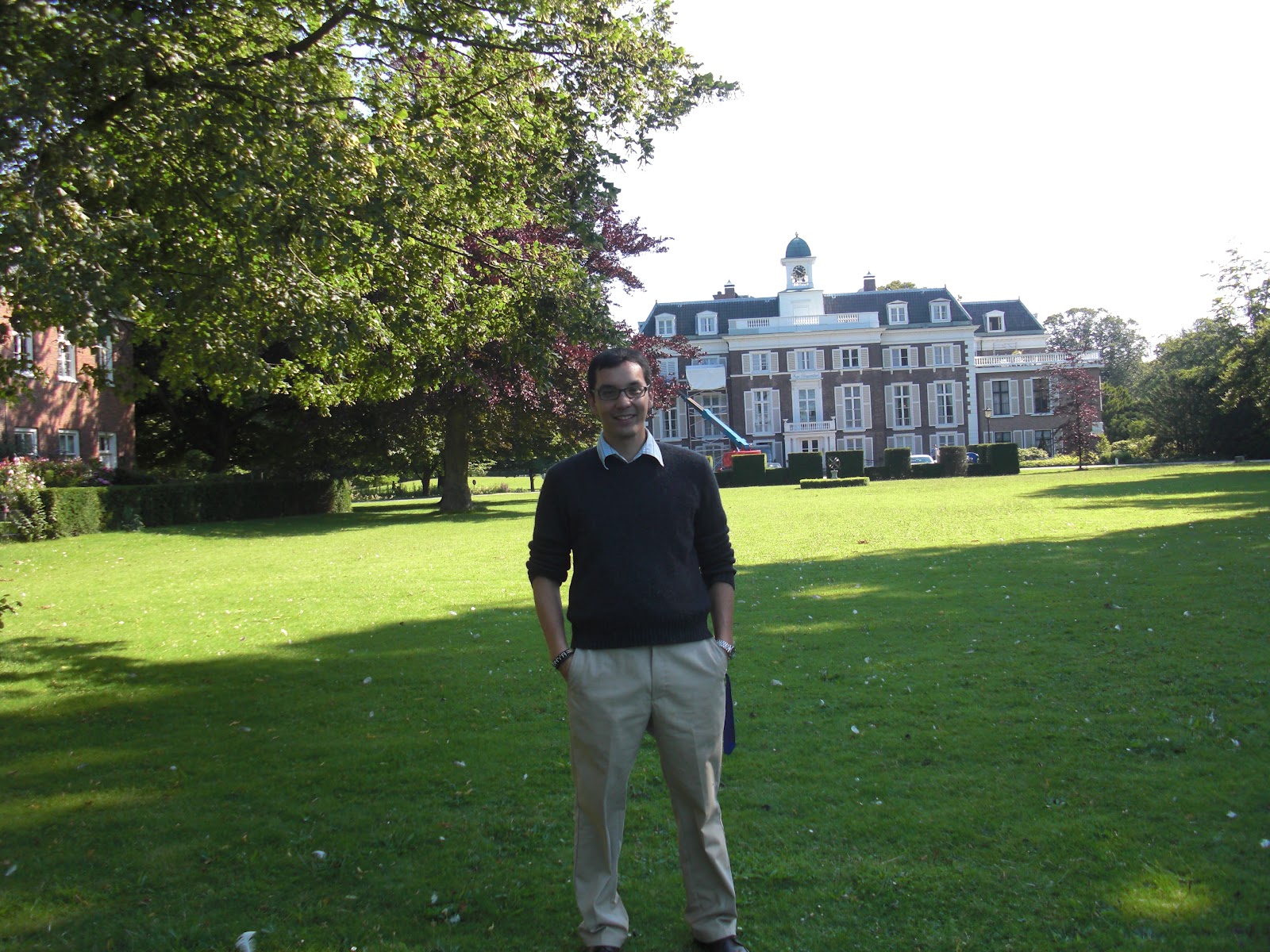
1. Clingendael - The symposium is held at a beautiful old building, which houses the Netherlands Institution for International Relations.


The building itself has a curious history. I can't remember the full details behind it, but the building was taken over by Nazis during the second world war, and occupied by such notables as Heinrich Himmler. One of the 'dignitary's' wives (was it Himmler's?) was (a) dog-crazy, and (b) completely ignorant of what was happening at Clingendael at the time. She made individual gravestones for each individual dog that she had, and buried them under a beautiful tree in the grounds behind the building.

Blind, Deaf, Genius Togo (the dog) , buried behind Clingendael
It's actually fairly strange, perhaps ironic, that these gravestones exist, given that Clingendael, at that time, was basically a interrogation and torture site. It's on this foundation that the Clingendael institute exists, as a learning institution dedicated to peace. That's a nice change.

It is located on a beautiful parks, and there are cows, sheep, and donkeys grazing around the fields. Ducks and swans swim in the ponds, and there is a small cafe that sells fantastic apple pie. An ideal learning centre.

 2. The Hague - The Hague (den Haag in Dutch) is truly the city of international justice. It houses the International Court of Justice, the Permanent International Court of Arbitration, the International Criminal Court, and the Special Tribunals for Sierra Leone, Lebanon, and Yugoslavia. For someone in my position, it's the centre of all things international justice. It's also a sleepy town, full of cute buildings, busy people riding bicycles all over the place, and a beautiful beach (in Scheveningen). I already know that I want to come back here.


3. The Conference - Of course, the reason I'm here is the conference, and it is not disappointing. I've had the pleasure of being lecture by academics, Lt. Generals at the UN, and, Special Representatives to the UN. Very high level discussions, and very insightful issues. This week was focused on the theoretical and conceptual backgrounds for transitioning states from conflict to peace and stability. In particular, we focused on Justice, Development, Security, and Governance issues - the four main pillars of a stable democracy.

Classes run from 8-5, monday to friday, with daily readings. If that is not full-on enough, I've volunteered to be part of a 'working group' on developing a 'Transitional Framework' - a blueprint for guiding states from conflict to peace and stability. A lofty goal - it's one thing that the organizers of the conference are very excited about, and I'm happy to be a part of it.

Otherwise, the group of participants have been wonderful. Coming from diverse backgrounds, it's created a very electric learning environment. I'm caught up in it, and the questions and discussions have been just as informative as the presentations themselves. I'm looking forward to how things are going to progress in the coming weeks!

In other news, I got an Op-Ed published in le Quotidien, a Senegalese newspaper! It was translated into French by an intern (Thanks Nastasia!), and is an update on the current situation on Kenya and the ICC. Check it out here.

That's all for now, check in next week!

The King and Queen of Scheveningen, slightly unimpressed